Showing posts with label south indian. Show all posts

Tuesday, 31 December 2013

neer dosa


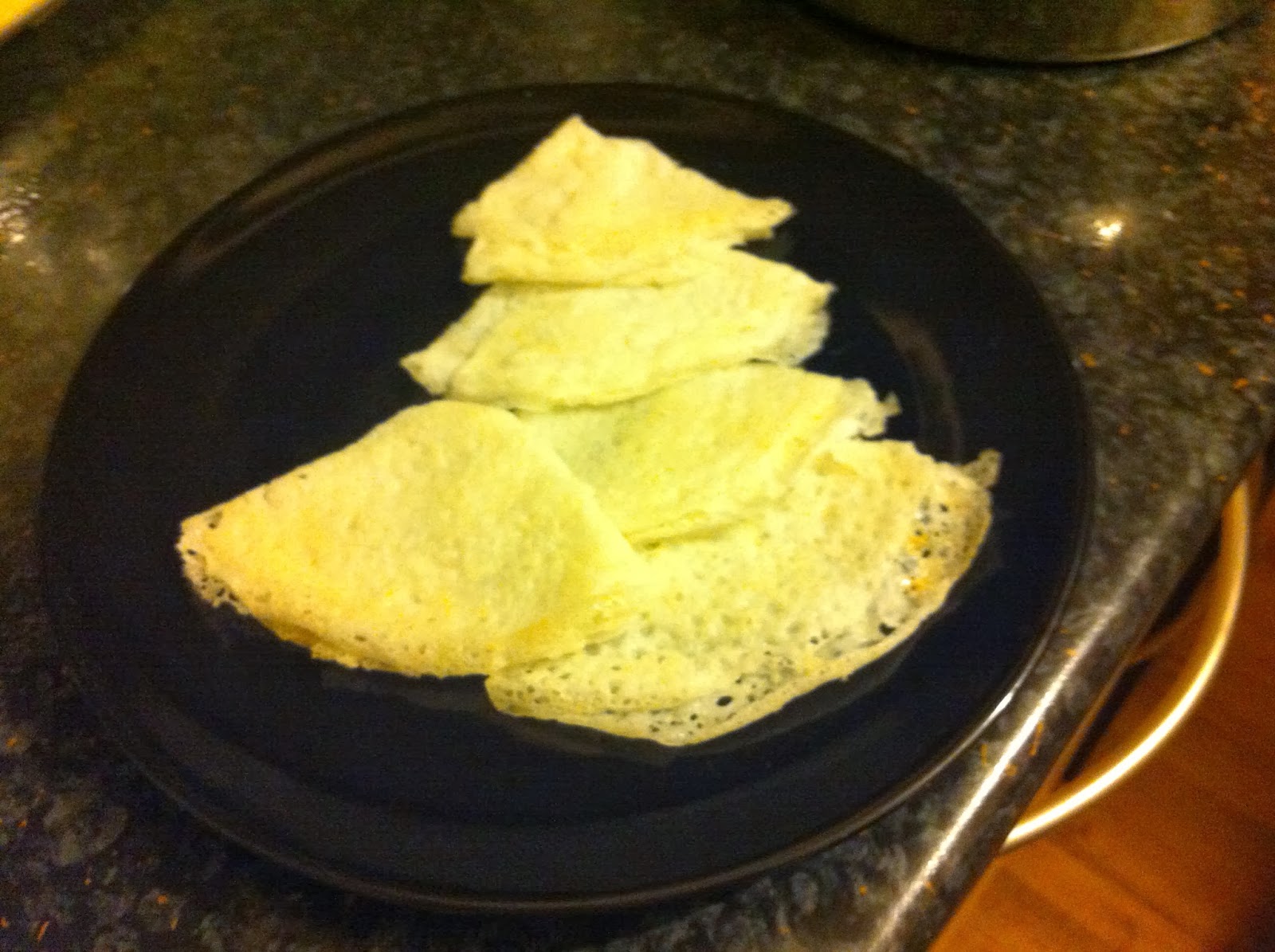
YUM YUM YUM YUM YUM!!! One of my fantastic customers had in invited me over for tea one day, after a day in the salon. Masala dosa has always been an all time winner for me, but I just couldn't emagine what she was she was trying to explain to me during that day. She explained that these dosa are REALLY something special! They are soft and lacy, with a delicate flavour, made from rice and a hint of coconut. "I will cook them for you later". Because I have turned down a few offers before I thought to myself that I must try this time. I suppose that I have turned down offers to learn how to cook authentic food before out of shyness and not wanting to put people out, but she insisted and I knew that it would make her happy. Well once I had tried these little folded pieces of joy, I was just hooked instantly!

We had a lovely chat and a catch up while we were waiting for the rice to soak. She dressed me up in her sarees and jewellery and I have never felt like such a princess before! This has been a regular treat for me when I go to visit her, but I wont bore you with that story now lol :-)

the picture above shows the true colour of the dosa. The picture below is a good close up of the lacy texture, but they look yellow because I took that picture in my kitchen late at night and the light wasn't very good :-S
Ingredients:-

1 cup of sona masuri rice, but any medium grain will do. I have even used basmati and it works fine.
1/4 cup of grated coconut,
in total, approximately 1 1/4 cups of water. more or less may be needed.
3/4 tsp salt or to taste.

Directions:-

1) Wash and soak the rice in enough cold water. My friend on the day soaked the rice for an hour in warm water, but for best results soak in cool water for at least 4 hours, or even over night.

2) Drain the rice and grind with the coconut and some fresh water in a blender until very, very smooth..you will just need to add a little water at a time and also remember to give you blender a rest in between grinding, otherwise it might over heat and go into meltdown! :) To test if you have the batter thin enough and fine enough, check on the back of a spoon. if the batter clings to the spoon, it is too thick. If you batter has grit in it, it hasn't been ground enough. Add the salt. The Picture below shows how the batter doesn't cling to the spoon at all. That is why the dosa is called "neer dosa" It translates into "water dosa"


3) To cook the dosa, you will need a relatively  new non-stick pan, with a tight fitting lid. heat the pan over a medium to low heat. splash a few drops of water, just to check if the pan is hot enough. If it sizzles and evaporates straight the way, then the pan is ready.

4) Pour a few drops of oil onto the pan and grease the pan with some kitchen paper and drop some of the batter onto the frying pan, but you need to kind of tilt the pan to spread a thin even layer.

5) With the back of a teaspoon, drop a few drops of oil in and around the dosa, paying particular attention to the edges. Put the lid on the pan and cook for 1-3 minutes. You don't want the dosa to be burned, but you need the dosa to be cooked.

6) Once the dosa is cooked, using a spatula, loosen the edges and fold into quarters.

Serve this melt in you mouth dish as an an accompaniment to curry with a sauce like sambhar, or enjoy plain with chutney or pickle. In the top picture, I have had it with chole. Enjoy and let me know what you think?    :-)


Thursday, 17 October 2013

DOSA!!!!!

At last!!!! I very proudly enter this blog. This really is one of my all time favourite recipes. It is also a really good recipe to be premiering the new look on my blog! Like it eh? Well I definitely think that it suits my blog better and I really am starting to feel like I have started to accomplish something, with this blog :-)

I feel so proud of myself for finally perfecting this recipe, as I live in a cold climate, it has been a real challenge for me to get the fermentation right and also the right ratio of ingredients.

There are many, many different types of dosas, fillings, chutneys, the list just goes on and on! I must say that i find masala dosas absolutely irresistible. They are filled with creamy masala potatoes and spices. I also quite like to add a red pepper and fried onions to the mixture.

I have had this dish many times at restaurants, but I will never forget the first time I tried these miracles! It was at a very large buffet restaurant, you like one of those all you can eat places, so I wasn't really expecting this place to be as good as it was. In this restaurant, you kinda get lots of tiny little open kitchens and I suppose this was one of those things that completed the whole experience. I walked up the the tiny street vendor style kitchen and asked for just a small masala dosa to try and the chef was more than obliging. I watched in utter amazement as he slapped some white batter onto the hot griddle and in a circular motion, he made the dosa, slapped on some chutney, smeared it around and then slapped on some potato masala, rolled it up and handed me some chutneys and sambar. VOILA!!! The finished dish was utterly amazing!

So for some time now i have been trying to recreate the dish that he cooked for me. So here we go, THE most popular dish in south india........... DOSA!!!!!!!!!!!!!!!!!!!!!! :-)


In this photo, there is the masala dosa,south indian coriander chutney, garlic chutney, "gunpowder masala" and carrot and chilli pickle. I will write the recipe for the rest of the chutneys very soon. :-)

Lots of planning and time needs to go into the dosa batter, but please dont let this put you off as they are actually really easy to make with the right equipment and the right instruction, so go on..... give it a go and let me know how you get on and what you think. :-) ;-)


The above photo shows what the fermented dosa batter should look like.

Ingredients for the batter, to be soaked:-

2 cups of plain long grain rice,
1/2 cup of parboiled easy cook rice,
2 1/2 tbs channa dal,
1 cup white urad dal,
1 tsp fenugreek seeds,
water- as required. 

To be added after fermentation:-

a pinch of bicarbonate of soda,
1-2 tsp salt- to taste.ly

1) Wash the dals with the fenugreek seed and the rice separately, but just a brief rinse. I have learned that there must be wild yeast already on the dals, which is very important for the fermentation. Leave them to soak separately in bowls of water over night. be sure to use plenty of water to soak, as the will grow in size. I have also found that you really do need to soak the rice and dals for at least 12 hours, but you can even go as long as 24 hours if it is a cold day. sometimes, the longer the better.

2) The next morning, drain the rice and the dals and reserve the water that it has been soaked in.

3) Firstly, blend the dal and the fenugreek seeds as finely as you can, gradually adding the reserved water. This is very important as the water helps with the fermentation. If you use water straight from the tap, your batter may not ferment. You should add enough water for the dals to grind properly and so it is not too hard on your blender. you will need approx 1- 1 1/2 cups of the reserved water for the dals. After blending properly, you batter should be light and fluffy.

4) leave a small amount of the liquidized dal batter in the blender and add the rice. blend this mixture with the same principle of adding just a small amount of water at a time. Again you should be left with a thick, lump free batter with just a few gritty bits in it.

5) In an overly large metal bowl or stock pot, add the batters and mix very well. In most recipes, at this point the ask you to add the salt. Where I live i find it impossible to find non iodized salt, or kosher salt, so I never add the salt until the very end, otherwize your batter will probably not ferment at all.

6) As I live in a cold climate, it can be a real challenge to find a good place in the house to ferment my batters. Some people use the oven with just the light on, but that never seems to work properly for me. It always works best for me if I put the batter into the airing cupboard for me, so I pop the batter in there and leave it until it is fully fermented. around 12/24 hours for where I live. see photo for reference.

7) Once the batter is well fermented, add the salt. You can actually taste the batter at this point for checking the salt levels are to your taste. Pre-heat a heavy based towa or a good and preferably new large frying pan onto a medium heat. Dont ask me why, but for some reason if you have used a pan for chapattis or anything of the sorts, then your dosa will stick and become a mess. So please chose your pan wisely.

8) Once the pan is hot and you can check by splashing a few drops of water onto the pan. If it sizzles straight the way, then the pan is hot enough to use. If you pan is too cold, then you will not be able to spread the dosa around the pan properly.

9) For this next step, you will need something with a flat bottom or something very close to flat. I use one of my metal measuring cups. Just before you need to use the batter, ladle a few spoons into a separate bowl and mix a tiny pinch of the soda and mix thoroughly.

10) So then next, starting from the center, ladle a good dollop of the batter and spread, using a circular movement until you have a thin even circular shape.

11) Wait for a few moments or until it is starting to look as though it is starting to dry out. At this point you need to splash a few drops of oil around the edge of the dosa and a few dotted randomly around. spread the oil a little if you can.

12) You now need to let it cook for a minute or so, or until you start to see brown spots. It should hopefully start to curl up at the edges too, so with the back of a spatula, loosen the dosa off the bottom of the pan and then gently flatten the edges until you have a nice even golden colour on the bottom.

13) At this point, if you are making masala dosa, place some of the potato masala into the center of the dosa and spread it around slightly.

14) With the spatula, curl or fold the dosa and gently slide onto a plate, which already had all of the extras served onto it. The most famous side dishes are sambar, coconut chutney, gunpowder chutney, coriander chutney etc.


ENJOY!!!!! :)
 Any feed back always leaves me eternally grateful. especially if you start to follow :-) 

Thursday, 1 November 2012

South Indian Okra in a Yogurt and Coconut sauce.


This is a realy good dish if you need introducing to okra, becuse of the sauce, it is sweet and sour and rich with coconut. It really is so delicious.

I am not exactly sure of this dishes actual name because a friend has kindly given this recipe. My friend is from kerala and is not to sure on how to write in english.

Last week she invited me over for lunch and she had heard about me blogging about real indian food. She said that she could remember me saying one time in her favourite restaurant, that I would've liked to of recreated the thali that we enjoyed on that particular day. She was going to be cooking this dish anyway for her family so she remembered about me :-) Of cause i was overjoyed to receive the invitation and I gladly accepted.

I decided to walk to her house because it was quite a nice day, one of those days where it is cold and crisp, but a nice bright sun. Once I had arrived at the end of her street I could smell her food! It reminded me of one of those cartoons where the hungry animal gets a whiff of some delicious food and floated it the air to follow the scent :-) As i walked up her garden path the fabulous aroma got stronger and stronger and even more delicious. She must have seen me coming to the door, because she opened the door before I could even knock. She greeted me with open arms and said come in, come in! I walked into her kitchen and it was full of her female relatives. They were all busy doing something, Her Mother was grinding some batter for dosa, her sister was kneading some bread, and there was some of her aunts and cousins there too. It was a kind of organised kaos. She called me over to the cooker and firstly asked if they could get me anything to drink. Her aunt gave me a cup of chai (Indian tea) and my friend and I sat down for a chat.
When we had finished our chai she said to me that we should get on, she handed me a pen and paper and she said that as a gift for being a good friend, she was handing me this recipe that had been through her family for a very long time. I could thank enough, but she just kindly replied " just invite me round for tea" I love her so much! Thanks hun! :-)

Here is my friends beautifully simple, South Indian Okra recipe.

Ingredients:-

2 cups of fresh okra, washed and dried, cut into 1/2 inch flowers
1/2 cup of fresh yogurt (dahi)
1/2 cup freshly grated, frozen or desiccated coconut. If you are using desiccated coconut then you should soak in boiled water for about 1/2 hour, reserving the coconut water.
3 tbs oil,
1 tsp mustard seeds,
10-12 curry leaves,
1/2- 1 tsp kashmiri chilli powder,
1/2 tsp green chilli paste,
water - as required.
salt to taste,
1 1/2- 3 tsp sugar- as per your taste,
fresh green coriander to garnish.


Directions:-

1) Heat some oil in a pan and fry the okra on a low to medium heat until browning at the edges and all of the sliminess has disappeared. Make sure that you don't keep stirring the okra otherwise it will become really slimy and not very nice. Drain on kitchen paper.

2) In a blender, or with a hand blender, mix together the yogurt, red chilli powder, coconut, salt and sugar. Blend until you have a fairly cause paste.

3) Check the seasoning and add sufficient water, but not too much. Test again.

4) Heat a saucepan over a medium to hot heat and add the mustard seeds. Wait until they pop and then add the curry leaves. Let them splutter and then add the okra and sauce.

5) Reheat gently up to boiling point and then serve hot with chapatis and rice, or as part of your favorite thali

Tuesday, 7 August 2012

Idli Sambar Recipe


MMM, the aroma of this dish really is something else!! I really do insist on you making some home made masala powder when you are cooking this dish. I think that it is what makes the difference between home made sambar opposed to restaurant style sambar. Whenever I have eaten restaurant sambar it has always been far too watery and not enough vegetables. To be quite honest all of the restaurant don't really cut the mark for me. I don't want to sound greedy, it's just that there are never enough vegetables and it is always far too thin.... gasp of relief...the rant is over lol :-)

ingredients- For the sambar

To be roasted and then ground into a a fairly coarse powder:-

1-3 dried red chillies,
1 tbs coriander seeds,
1 tsp black mustard seeds,
1 tsp fenugreek seeds,
2 cloves,
2 cardamoms,
a small piece of cinnamon,
1/4- 1/2 tsp black pepper,
1 tsp channa dal,
1 tsp white urad dal,
1/2 tsp cumin seeds,
1/4 tsp asafoetida
1/2 tsp turmeric

(If you have these spices in powder form then you can add as a short cut but the spices definitely taste better if you use the whole spice.)

1 cup or about 100g toor dal, ( soaked in hot water for at least 1/2 hour in hot water,)
1 white potato, (cubed)
1 red sweet potato, (cubed)
2 carrots peeled and cut into rounds,
a fist-full of washed and trimmed green beans,
2 drumsticks chopped and boiled for bout 10 minutes
3-4 tomatoes puréed,
1/2 tsp mustard seeds,
1/2 tsp cumin seeds,
about 10-12 curry leaves,
1/2 tsp green chilli paste, or to taste
1 tsp ginger paste,
1 tsp tamarind paste to taste,
1 tbs sugar,
salt to taste,
fresh green coriander.

Directions:-

1) Roast the spices on a low to medium flame until they have turned a shade darker. Leave them aside on a cool plate or bowl to cool down completely. Once they have cooled down, grind them to a fairly coarse powder, but not too coarse.

2) while the spices are cooling, prepare the vegetables and boil or steam until nice and tender. Around ten minutes. Also pressure cook the toor dal for about 4-5 whistles in about 4 cups of water and some salt.

3) In the largest pan you have, heat 2-4 tbs oil and add the mustard seeds. Wait until they pop and then add the cumin seeds and curry leaves.

4) Add the tomato purée, garlic, chilli and ginger paste and cook until you start to see the oil separating from the mixture.

5) Lower the heat to low and add the powdered spices and give it a good stir.

6) Add the dal and give everything a really good mash together until the dal has turned all saucy.

7) Add the cooked veggies and mix well so that the sauce coats everything.

8) Add about 6-8 cups of water and the sugar. This water measurement is a rough measurement. Sambar is supposed to be fairly and soupy, but please, not too thin. Bring to the boil and simmer every thing together for around 20 minutes on a low heat.

9) Check the seasoning and add the tamarind if you think that it needs to be more sour. Remember that it needs to be fairly hot, sour, sweet, salty, so adjust these to your tastes.

Garnish with coriander and serve with idli's or rice. BUT! You really need to try idli once in your life !!! :-)

Sunday, 15 July 2012

Easy Idli! (rice dumpling for sambar)


IDLI!! I have always loved the soft little clouds of fluffy delight. There is just something so satisfying about these seemingly simple dumplings from heaven!
For a long time I had only eaten these at restaurants and never really tried to cook them at home because the whole preparation thing, until I bought a bag of ready prepared idli flour! Not the ready mixed that you get in a box! I have tried these before and they really don't cut the mark so this is why I tried the bag of the properly milled mix. When I did it, it was so so easy and the out come was the best yet! The only downside really was the price. I don't want to sound like I'm being stingy, it just that I hate paying the high price of things that are ready prepared, when I can just put a tiny bit of prep, good results and half of the price! So, I thought that I would try to grind my own idli mix. The only downside to me doing this is, I only have a small grinder and i can't mix up anything wet into it. I have a food processor but it just doesn't seem to grind fine and evenly enough. I just use my processor for the convenience of chopping and grating food stuffs, although it is quite good for making coriander chutney! :-) But anyway! I thought that I could grind my own flour mix. So after much trial and error, I bring to you, my easy idli recipe!
P.S I will improve the photo soon because the idli's look yellow and they really are white! :-)

Ingredients:-

1 measuring cup of coarse rice flour,
1 tbs white urad dal,
1/8-1/4 fenugreek seeds,
1 tsp salt - or to taste,
1 tsp eno. (not to be mixed until the last minute.)

Directions:-

1) Grind the urad dal and the fenugreek seeds to a coarse flour. Sieve the flour to separate the ungrounded grains. Blend again if you need to.

2) Mix the ground mixture and the salt with the coarse rice flour and mix together well.

3) Mix enough hot water from the kettle to make a fairly thick batter. It should be about dropping consistency, but not quite poring consistency. You can always add some more hot water if the batter thickens. The amount of water was the thing that I have struggled with the most. I know that I haven't written a measure for the water, but I find that the measurement is different every time. I have also found that if you don't add enough water the batter will not ferment properly, but if you add too much water, the idli's will become a messy mush when cooked.

4) Leave to ferment over night in a warm place. Because I live in England, I leave my mixture in the airing cupboard over night or for about 11 hours.

5) when you start to see bubbles in the batter it is ready to cook.

6) Grease your idli moulds and set a large pan of water to boil. If you don't have an idli mould you can always use an egg poacher.

7) If you are using an egg poacher you will have to add the eno in batches. If you are using an idli mould add all of the eno and mix in quickly and then ladle the mixture in to the moulds.

8) Steam for about 8-10 minutes. You can check if the idli's are cooked through by sticking a knife into the thickest part. If the knife comes out clean with no creamy bits on it the idli's are cooked.

Enjoy with sambhar or tomato rasam.


Saturday, 2 June 2012

Aloo masala (versatile potato mixture)


This potato mixture is so versatile, I use it for so many different things like stuffed mirchi bhaji (chilli pakora), aloo paratha, dosa, batata vada etc..
I actually use quite a lot of garlic in this recipe, but you can omit if its not to your taste, but it really does make a difference to the dish because it becomes very mild once it has been cooked down and becomes all scrumptious.

Ingredients:-

1 kg floury potatoes- boiled
About 10 cloves of garlic or a very large tsp of garlic purée,
1-2 green chillies,
about 7 fresh curry leaves,
1/4 tsp mustard seeds
1/4 tsp cumin seeds
1/2 onion diced,
a large pinch asafoetida,
1/2 tsp turmeric powder,
1 tbs fresh coriander,
1/2 tbs lemon juice or to taste,
1 1/2 tbs oil
salt to taste.

directions:-

1) Heat the oil in a pan over a medium to hot heat and add the mustard seeds. Wait until they pop like popcorn.

2) Add the cumin seeds and the asafoetida and let them sizzle for a second or so before you add the onions. Saute the onions until they are light brown.

3) Add the garlic, chillies and the ginger and stir for a few minutes

4) Add the lemon juice, salt, coriander and the turmeric and give it a quick stir before adding the potato.

5) Mash the potato into the mixture making sure that you leave some chunks of potato.

Test the seasoning to cheek if is your taste and a just if you need to.

Enjoy the countless things you can do with this amazing mixture. On this opportunity i made potato vadas.